Arrestin-β-1 Rabbit Monoclonal Antibody
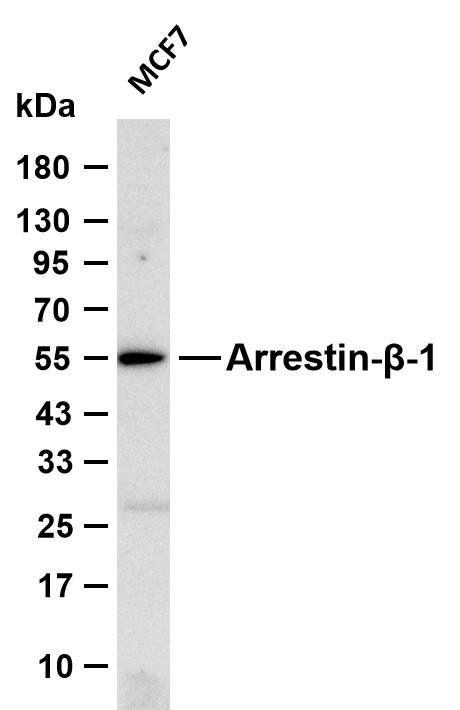
Various whole cell lysates were separated by 4-20% SDS-PAGE, and the membrane was blotted with anti-Arrestin-β-1 antibody. The HRP-conjugated Goat anti-Rabbit IgG(H+L) antibody was used to detect the antibody.

Various whole cell lysates were separated by 4-20% SDS-PAGE, and the membrane was blotted with anti-Arrestin-β-1 antibody. The HRP-conjugated Goat anti-Rabbit IgG(H+L) antibody was used to detect the antibody.

Catalog Number:MABN87872
Conjugate:Unconjugated
Size:100 ug
Concentration:1mg/ml. The concentration of this product may be batch-dependent.
Host:Rabbit
Isotype:IgG
Immunogen:The specific immunogen used to produce this antibody is proprietary information.
Reactivity:Human,Mouse,Rat
Applications:IHC 1:200-1:1000; WB 1:1000-1:5000; IF 1:200-1:1000; ELISA 1:5000-1:20000
Molecular Weight:Calculated MW: 51 kDa; Observed MW: 55 kDa
Purification:The antibody was affinity-purified from rabbit antiserum by affinity-chromatography using epitope-specific immunogen.
Form:Liquid
Synonyms:ARRB1; ARR1; Beta-arrestin-1; Arrestin beta-1

Members of arrestin/beta-arrestin protein family are thought to participate in agonist-mediated desensitization of G-protein-coupled receptors and cause specific dampening of cellular responses to stimuli such as hormones, neurotransmitters, or sensory signals. Arrestin beta1 is a cytosolic protein and acts as a cofactor in the beta-adrenergic receptor kinase (BARK) mediated desensitization of beta-adrenergic receptors. Besides the central nervous system, it is expressed at high levels in peripheral blood leukocytes, and thus the BARK/beta-arrestin system is believed to play a major role in regulating receptor-mediated immune functions. Alternative spliced transcripts encoding differential isoforms of arrestin beta1 have been described.

Applications

IHC 1:200-1:1000; WB 1:1000-1:5000; IF 1:200-1:1000; ELISA 1:5000-1:20000

Immunogen

The specific immunogen used to produce this antibody is proprietary information.
Target Background

Members of arrestin/beta-arrestin protein family are thought to participate in agonist-mediated desensitization of G-protein-coupled receptors and cause specific dampening of cellular responses to stimuli such as hormones, neurotransmitters, or sensory signals. Arrestin beta1 is a cytosolic protein and acts as a cofactor in the beta-adrenergic receptor kinase (BARK) mediated desensitization of beta-adrenergic receptors. Besides the central nervous system, it is expressed at high levels in peripheral blood leukocytes, and thus the BARK/beta-arrestin system is believed to play a major role in regulating receptor-mediated immune functions. Alternative spliced transcripts encoding differential isoforms of arrestin beta1 have been described.

Synonyms:ARRB1; ARR1; Beta-arrestin-1; Arrestin beta-1

Storage

Aliquot and store at -20°C (valid for 12 months). Avoid freeze/thaw cycles.

Buffer

PBS, 50% glycerol, 0.05% Proclin300, 0.05% protective protein

Various whole cell lysates were separated by 4-20% SDS-PAGE, and the membrane was blotted with anti-Arrestin-β-1 antibody. The HRP-conjugated Goat anti-Rabbit IgG(H+L) antibody was used to detect the antibody.

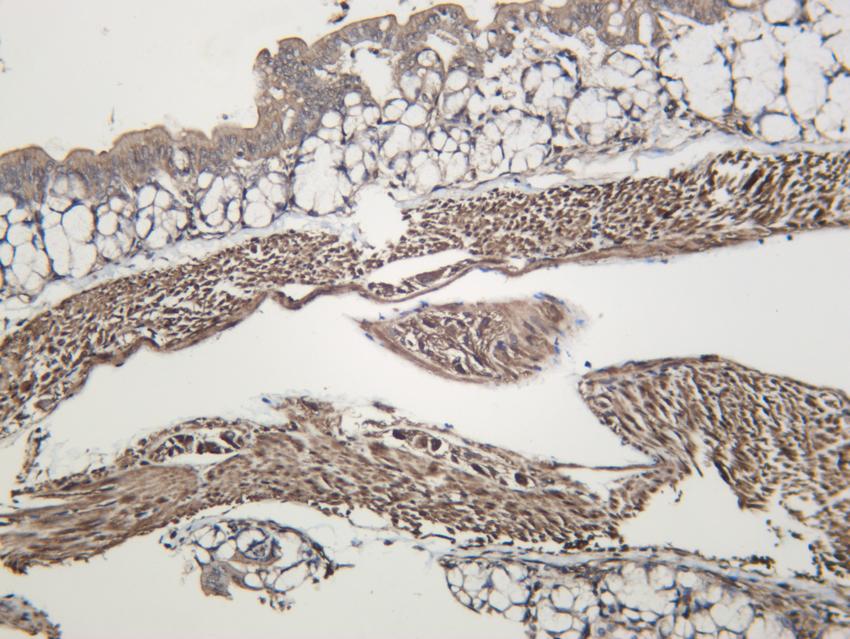
Mouse colon was stained with anti-Arrestin-β-1 Rabbit antibody

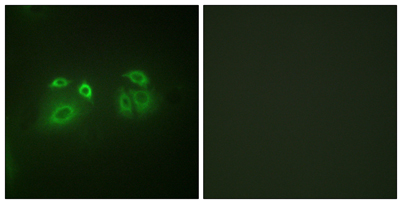
Immunofluorescence analysis of A549 cells, using Arrestin1 Antibody. The picture on the right is blocked with the synthesized peptide.

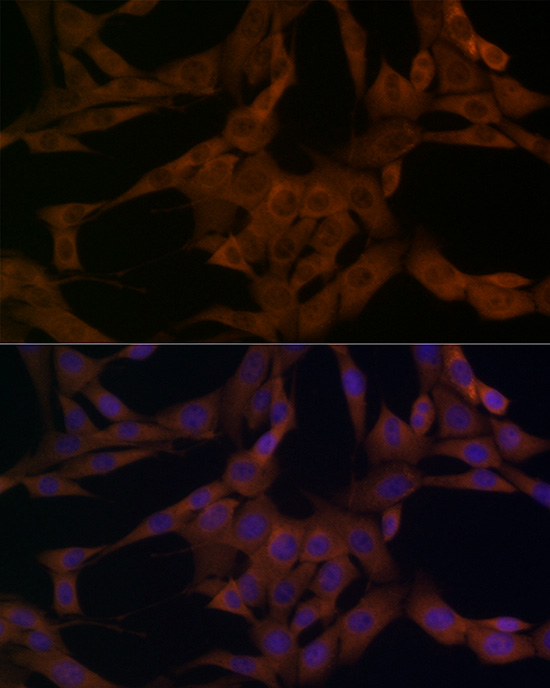
Immunofluorescence analysis of NIH/3T3 cells using β-arrestin1 Rabbit pAb at dilution of 1:100 (40x lens). Secondary antibody:Cy3-conjugated Goat anti-Rabbit IgG (H+L) ) at 1:500 dilution. Blue: DAPI for nuclear staining.

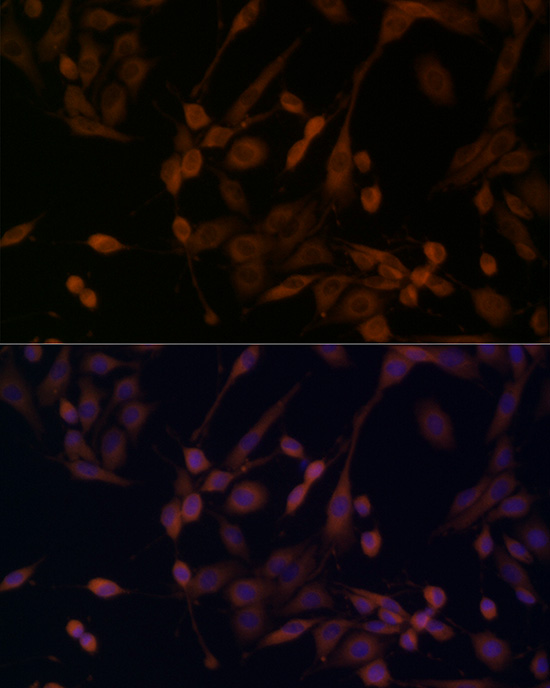
Immunofluorescence analysis of PC-12 cells using β-arrestin1 Rabbit pAb at dilution of 1:100 (40xlens). Secondary antibody: Cy3- conjugated Goat anti-Rabbit IgG(H+L) at 1:500 dilution. Blue:DAPI for nuclear staining.

No documents available.