Caspase 3 (cleaved) ASP175 Rabbit Polyclonal Antibody
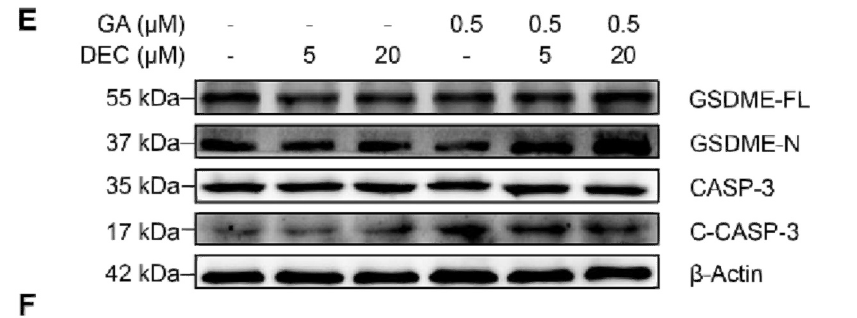
Western blot analysis of extracts using Caspase-3 Antibody(upper) or Cleaved Caspase-3 (Asp175) Antibody (lower).Postsurgical wound management and prevention of triple-negative breast cancer recurrence with a pryoptosis-inducing, photopolymerizable hydrogel.

Western blot analysis of extracts using Caspase-3 Antibody(upper) or Cleaved Caspase-3 (Asp175) Antibody (lower).Postsurgical wound management and prevention of triple-negative breast cancer recurrence with a pryoptosis-inducing, photopolymerizable hydrogel.

Catalog Number:AB-83787
Conjugate:Unconjugated
Size:100 ug
Concentration:1mg/ml
Host:Rabbit
Isotype:IgG
Clone:Poly
Immunogen:The antiserum was produced against synthesized peptide derived from human Caspase 3. AA range:126-175
Reactivity:Human;Mouse;Rat
Applications:Western blotting 1:1000 Immunohistochemistry (Paraffin) 1:200
Molecular Weight:17,35kDa
Purification:Polyclonal antibodies are producedby immunizing animals with a synthetic peptide correspondingto amino-terminal residues adjacent to (Asp175) inhuman caspase-3.
Form:Liquid
Synonyms:CASP3; CPP32; Caspase-3; CASP-3; Apopain; Cysteine protease CPP32; CPP-32; Protein Yama; SREBP cleavage activity 1; SCA-1

Applications

Western blotting 1:1000 Immunohistochemistry (Paraffin) 1:200

Immunogen

The antiserum was produced against synthesized peptide derived from human Caspase 3. AA range:126-175

Target Background

Caspase-3 (CPP-32, Apoptain, Yama, SCA-1) is one of the key executioners of apoptosis, as it is either partially or totally responsible for the proteolytic cleavage of many key proteins such as the nuclear enzyme poly (ADPribose) polymerase (PARP) (1). Activation of caspase-3 requires proteolytic processing of its inactive zymogen into activated p17 and p12 fragments. Cleavage of caspase-3 requires aspartic acid at the P1 position (2).Cleaved Caspase-3 (Asp175) Antibody detects endogenous levels of the large fragment (17/19 kDa) of activated caspase-3 resulting from cleavage adjacent to Asp175. This antibody does not recognize full length caspase-3 or other cleaved caspases. This antibody detects non-specific caspase substrates by western blot. Non-specific labeling may be observed by immunofluorescence in specific sub-types of healthy cells in fixed-frozen tissues (e.g. pancreatic alpha-cells). Nuclear background may be observed in rat and monkey samples.

Synonyms:CASP3; CPP32; Caspase-3; CASP-3; Apopain; Cysteine protease CPP32; CPP-32; Protein Yama; SREBP cleavage activity 1; SCA-1

Storage

Store at -20°C, and avoid repeat freezethawcycles

Buffer

Liquid in PBS containing 50% glycerol, 0.5% BSA and 0.02% sodium azide.

Western blot analysis of extracts using Caspase-3 Antibody(upper) or Cleaved Caspase-3 (Asp175) Antibody (lower).Postsurgical wound management and prevention of triple-negative breast cancer recurrence with a pryoptosis-inducing, photopolymerizable hydrogel.

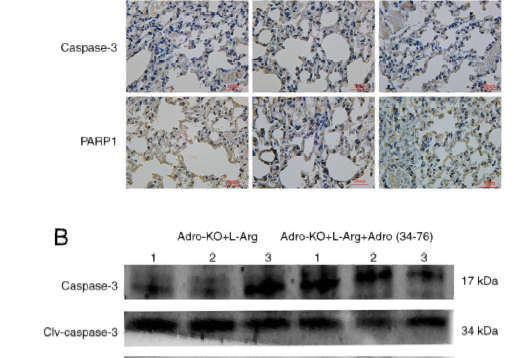
Adropin attenuates pancreatitis‑associated lung injury through PPARγ phosphorylation‑related macrophage polarization.

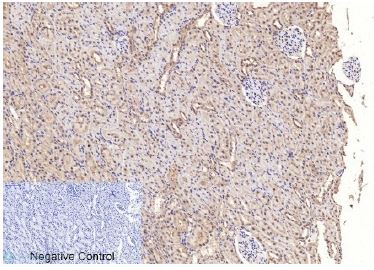
Immunohistochemical analysis of rat kidney tissue. The antibody was diluted at 1:200 (4°C,overnight Sodium citrate pH6.0 was used for antibody retrieval (>98°C, 20min). Secondary antibody was diluted at 1:200 (room temperature, 30min).

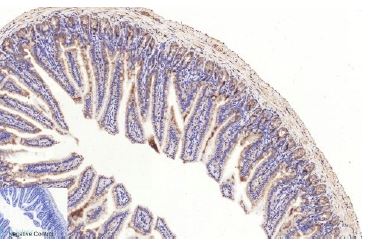
Immunohistochemical analysis of mouse colon tissue. The antibody was diluted at 1:200 (4°C,overnight). Sodium citrate pH6.0 was used for antibody retrieval (>98°C, 20min). Secondary antibody was diluted at 1:200 (room temperature, 30min)

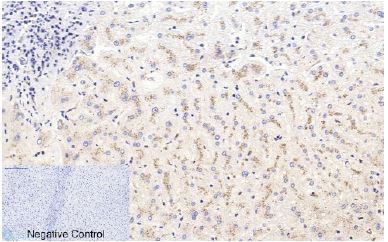
Immunohistochemical analysis of human liver tissue. Anti-Cleaved-Caspase-3 p17 (D175) at 1:200 (4°C,overnight). Antigen retrieval - Sodium Citrate pH6 (>98°C, 20min). Secondary - 1:200 (room temp, 30min). Negative control - Secondary only

No documents available.