Cleaved-Caspase-3 p17 (D175) Rabbit Polyclonal Antibody
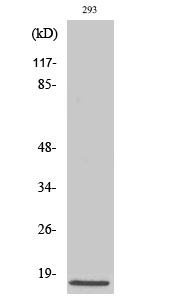
Western Blot analysis of 293 cells using Cleaved-Caspase-3 p17 (D175) Polyclonal Antibody

Western Blot analysis of 293 cells using Cleaved-Caspase-3 p17 (D175) Polyclonal Antibody

Catalog Number:ABE1002
Conjugate:unconjugated
Size:100 ug
Concentration:1 mg/ml
Host:Rabbit
Isotype:IgG
Clone:Polyclonal
Immunogen:The antiserum was produced against synthesized peptide derived from human Caspase 3. AA range:126-175
Reactivity:Human;Mouse;Rat
Applications:WB 1:500-2000, IHC-p 1:50-300, IF 1:50-300
Molecular Weight:17-34kD
Purification:The antibody was affinity-purified fromrabbit antiserum by affinity-chromatography using epitope-specific immunogen.
Form:liquid
Synonyms:CASP3; CPP32; Caspase-3; CASP-3; Apopain; Cysteine protease CPP32; CPP-32; Protein Yama; SREBP cleavage activity 1; SCA-1

This gene encodes a protein which is a member of the cysteine-aspartic acid protease (caspase) family. Sequential activation of caspases plays a central role in the execution-phase of cell apoptosis. Caspases exist as inactive proenzymes which undergo proteolytic processing at conserved aspartic residues to produce two subunits, large and small, that dimerize to form the active enzyme. This protein cleaves and activates caspases 6, 7 and 9, and the protein itself is processed by caspases 8, 9 and 10. It is the predominant caspase involved in the cleavage of amyloid-beta 4A precursor protein, which is associated with neuronal death in Alzheimer's disease. Alternative splicing of this gene results in two transcript variants that encode the same protein. [provided by RefSeq, Jul 2008],

Applications

WB 1:500-2000, IHC-p 1:50-300, IF 1:50-300

Immunogen

The antiserum was produced against synthesized peptide derived from human Caspase 3. AA range:126-175

Target Background

This gene encodes a protein which is a member of the cysteine-aspartic acid protease (caspase) family. Sequential activation of caspases plays a central role in the execution-phase of cell apoptosis. Caspases exist as inactive proenzymes which undergo proteolytic processing at conserved aspartic residues to produce two subunits, large and small, that dimerize to form the active enzyme. This protein cleaves and activates caspases 6, 7 and 9, and the protein itself is processed by caspases 8, 9 and 10. It is the predominant caspase involved in the cleavage of amyloid-beta 4A precursor protein, which is associated with neuronal death in Alzheimer's disease. Alternative splicing of this gene results in two transcript variants that encode the same protein. [provided by RefSeq, Jul 2008],

Synonyms:CASP3; CPP32; Caspase-3; CASP-3; Apopain; Cysteine protease CPP32; CPP-32; Protein Yama; SREBP cleavage activity 1; SCA-1

Storage

-20°C/1 year

Buffer

Liquid in PBS containing 50% glycerol, 0.5%BSAand0.02% sodium azide.

Western Blot analysis of 293 cells using Cleaved-Caspase-3 p17 (D175) Polyclonal Antibody

Postsurgical wound management and prevention of triple-negative breast cancer recurrence with a pryoptosis-inducing, photopolymerizable hydrogel JOURNAL OF CONTROLLED RELEASE Sanjun Shi WB Mouse 4 T1 cell

Zhou, Li, et al. "Coptisine induces apoptosis in human hepatoma cells through activating 67-kDa laminin receptor/cGMP signaling." Frontiers in pharmacology 9 (2018).

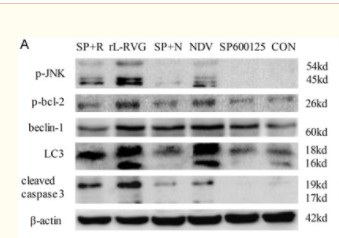
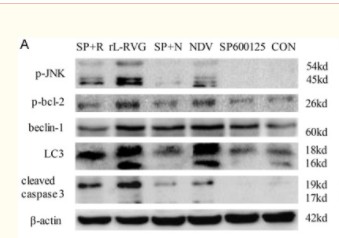
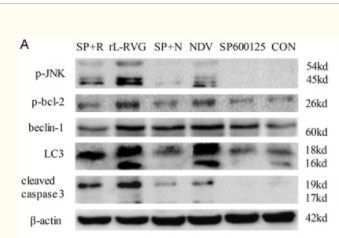
Bu, Xuefeng, et al. "Recombinant Newcastle disease virus (rL-RVG) triggers autophagy and apoptosis in gastric carcinoma cells by inducing ER stress." American journal of cancer research 6.5 (2016): 924.

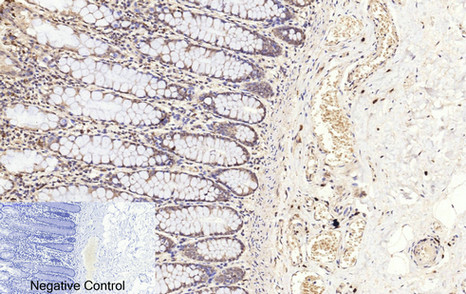
Immunohistochemical analysis of paraffin-embedded Human-colon tissue. 1,Cleaved-Caspase-3 p17 (D175) Polyclonal Antibody was diluted at 1:200(4°C,overnight). 2, Sodium citrate pH 6.0 was used for antibody retrieval(>98°C,20min). 3,Secondary antibody was diluted at 1:200(roomtempeRature, 30min). Negative control was used by secondary antibodyonly.

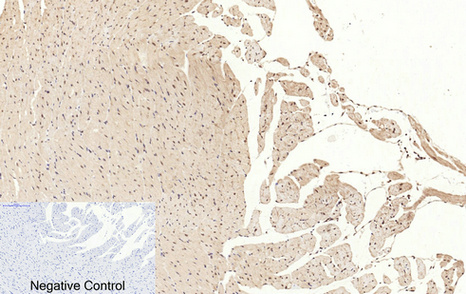
Immunohistochemical analysis of paraffin-embedded Rat-heart tissue. 1,Cleaved-Caspase-3 p17 (D175) Polyclonal Antibody was diluted at 1:200(4°C,overnight). 2, Sodium citrate pH 6.0 was used for antibody retrieval(>98°C,20min). 3,Secondary antibody was diluted at 1:200(roomtempeRature, 30min). Negative control was used by secondary antibody only.

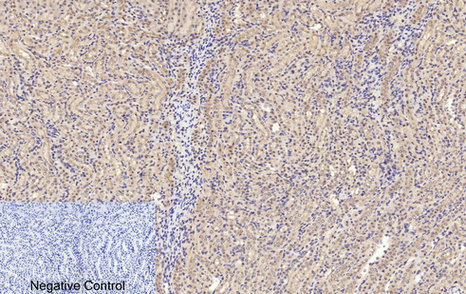
Immunohistochemical analysis of paraffin-embedded Mouse-kidney tissue.1,Cleaved-Caspase-3 p17 (D175) Polyclonal Antibody was diluted at1:200(4°C,overnight). 2, Sodium citrate pH 6.0 was used for antibodyretrieval(>98°C,20min). 3,Secondary antibody was diluted at 1:200(roomtempeRature, 30min). Negative control was used by secondary antibodyonly.

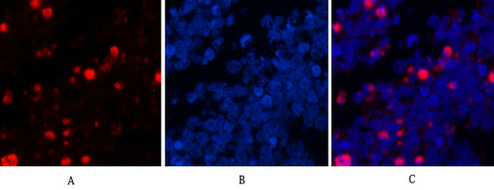
Immunofluorescence analysis of Human-lung-cancer tissue. 1,Cleaved-Caspase-3 p17 (D175) Polyclonal Antibody(red) was diluted at 1:200(4°C,overnight). 2, Cy3 labled Secondary antibody was diluted at1:300(room temperature, 50min).3, Picture B: DAPI(blue) 10min. PictureA:Target. Picture B: DAPI. Picture C: merge of A+B

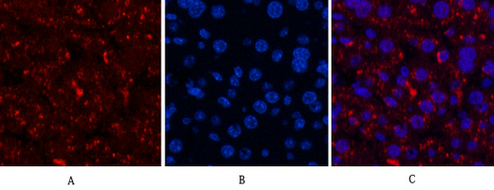
Immunofluorescence analysis of Mouse-liver tissue. 1,Cleaved-Caspase-3 p17 (D175) Polyclonal Antibody(red) was diluted at 1:200(4°C,overnight). 2, Cy3 labled Secondary antibody was diluted at 1:300(room temperature, 50min).3,Picture B: DAPI(blue) 10min. Picture A:Target. Picture B: DAPI. Picture C:merge of A+B

No documents available.