Tyrosine Hydroxylase Rabbit Polyclonal Antibody
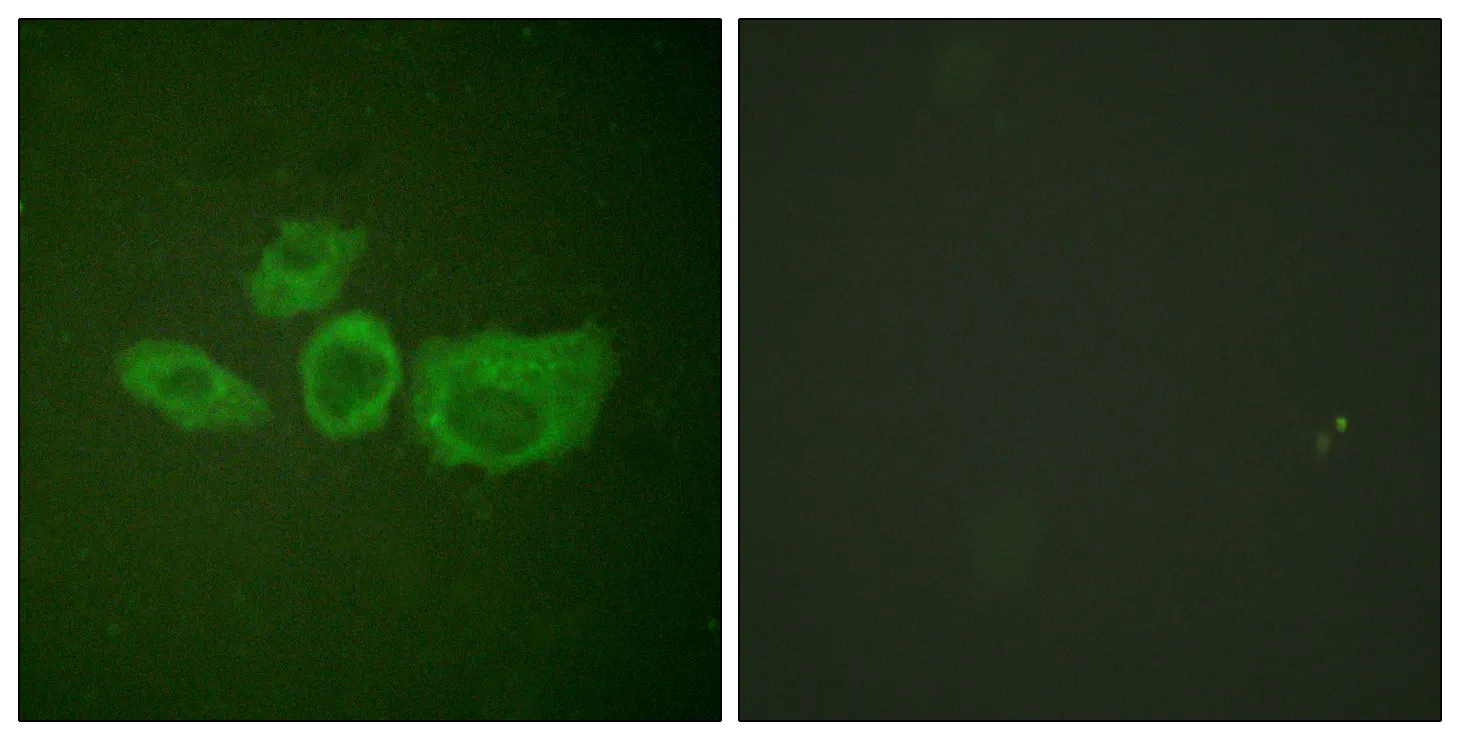
Immunofluorescence analysis of HUVEC cells, using Tyrosine Hydroxylase Antibody.
The picture on the right is blocked with the synthesized peptide.

Immunofluorescence analysis of HUVEC cells, using Tyrosine Hydroxylase Antibody. The picture on the right is blocked with the synthesized peptide.

Catalog Number:ABN18868
Conjugate:Unconjugated
Size:100μL
Concentration:1mg/ml
Host:Rabbit
Isotype:IgG
Clone:POLY
Reactivity:Human,Mouse,Rat
Applications:WB 1:500-1:2000,IHC 1:100-1:300,ICC/IF 1:200-1:1000,ELISA 1:10000-1:20000
Molecular Weight:55kDa
Purification:Affinity purification
Form:liquid
Synonyms:TH; TYH; Tyrosine 3-monooxygenase; Tyrosine 3-hydroxylase; TH

The protein encoded by this gene is involved in the conversion of tyrosine to dopamine. It is the rate-limiting enzyme in the synthesis of catecholamines, hence plays a key role in the physiology of adrenergic neurons. Mutations in this gene have been associated with autosomal recessive Segawa syndrome. Alternatively spliced transcript variants encoding different isoforms have been noted for this gene. [provided by RefSeq, Jul 2008],catalytic activity:L-tyrosine + tetrahydrobiopterin + O(2) = 3,4-dihydroxy-L-phenylalanine + 4a-hydroxytetrahydrobiopterin.,cofactor:Fe(2+) ion.,disease:Defects in TH are the cause of dystonia DOPA-responsive autosomal recessive (ARDRD) [MIM:605407]; also known as autosomal recessive Segawa syndrome. ARDRD is a form of DOPA-responsive dystonia presenting in infancy or early childhood. Dystonia is defined by the presence of sustained involuntary muscle contractions, often leading to abnormal postures. Some cases of ARDRD present with parkinsonian symptoms in infancy. Unlike all other forms of dystonia, it is an eminently treatable condition, due to a favorable response to L-DOPA.,enzyme regulation:Phosphorylation leads to an increase in the catalytic activity.,function:Plays an important role in the physiology of adrenergic neurons.,online information:Tyrosine hydroxylase entry,pathway:Catecholamine biosynthesis; dopamine biosynthesis; dopamine from L-tyrosine: step 1/2.,similarity:Belongs to the biopterin-dependent aromatic amino acid hydroxylase family.,tissue specificity:Mainly expressed in the brain and adrenal glands.,

Applications

WB 1:500-1:2000,IHC 1:100-1:300,ICC/IF 1:200-1:1000,ELISA 1:10000-1:20000
Target Background

The protein encoded by this gene is involved in the conversion of tyrosine to dopamine. It is the rate-limiting enzyme in the synthesis of catecholamines, hence plays a key role in the physiology of adrenergic neurons. Mutations in this gene have been associated with autosomal recessive Segawa syndrome. Alternatively spliced transcript variants encoding different isoforms have been noted for this gene. [provided by RefSeq, Jul 2008],catalytic activity:L-tyrosine + tetrahydrobiopterin + O(2) = 3,4-dihydroxy-L-phenylalanine + 4a-hydroxytetrahydrobiopterin.,cofactor:Fe(2+) ion.,disease:Defects in TH are the cause of dystonia DOPA-responsive autosomal recessive (ARDRD) [MIM:605407]; also known as autosomal recessive Segawa syndrome. ARDRD is a form of DOPA-responsive dystonia presenting in infancy or early childhood. Dystonia is defined by the presence of sustained involuntary muscle contractions, often leading to abnormal postures. Some cases of ARDRD present with parkinsonian symptoms in infancy. Unlike all other forms of dystonia, it is an eminently treatable condition, due to a favorable response to L-DOPA.,enzyme regulation:Phosphorylation leads to an increase in the catalytic activity.,function:Plays an important role in the physiology of adrenergic neurons.,online information:Tyrosine hydroxylase entry,pathway:Catecholamine biosynthesis; dopamine biosynthesis; dopamine from L-tyrosine: step 1/2.,similarity:Belongs to the biopterin-dependent aromatic amino acid hydroxylase family.,tissue specificity:Mainly expressed in the brain and adrenal glands.,

Synonyms:TH; TYH; Tyrosine 3-monooxygenase; Tyrosine 3-hydroxylase; TH

Storage

Store at 4°C short term. Aliquot and store at -20°C long term. Avoid freeze/thaw cycles.

Buffer

Liquid in PBS containing 50% glycerol, 0.5% protective protein and 0.02% New type preservative N.

Immunofluorescence analysis of HUVEC cells, using Tyrosine Hydroxylase Antibody. The picture on the right is blocked with the synthesized peptide.

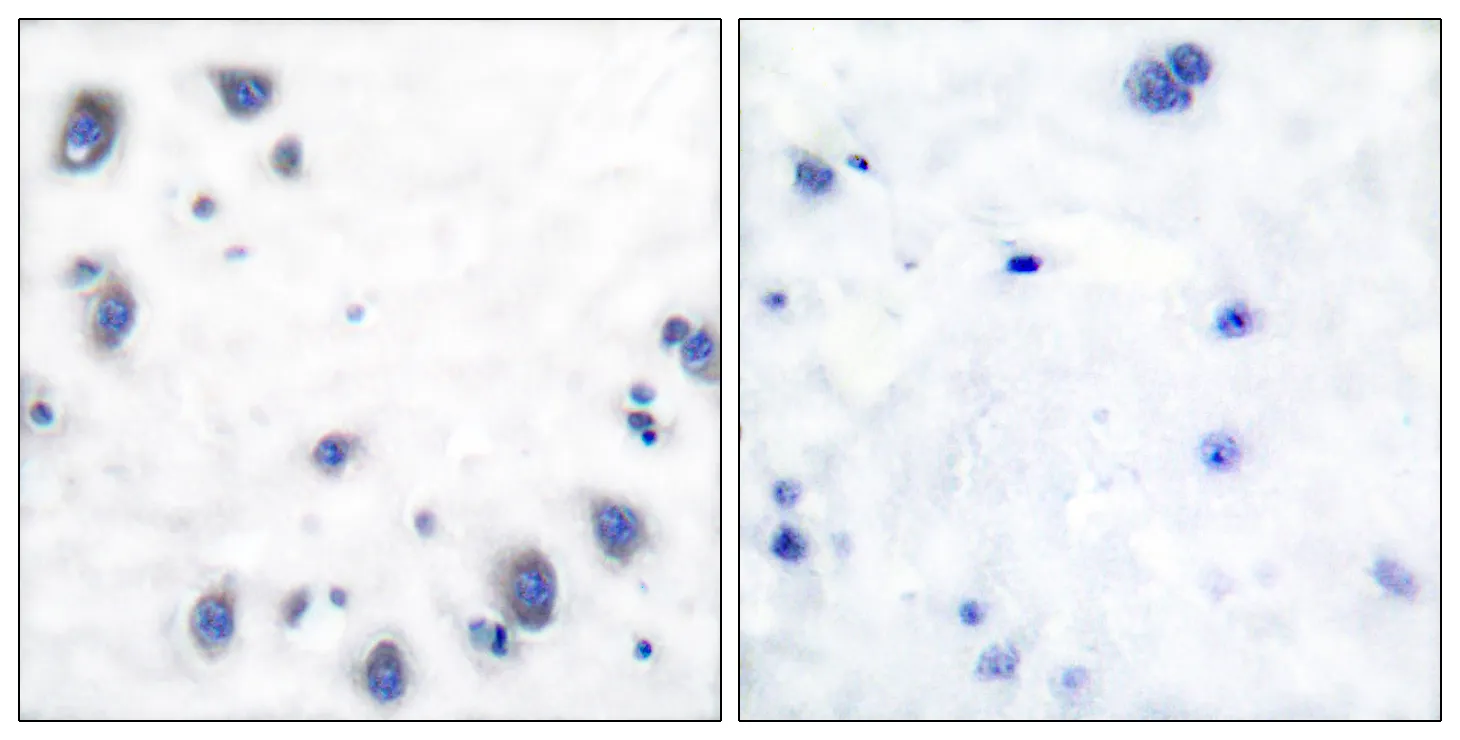
Immunohistochemistry analysis of paraffin-embedded human brain tissue, using Tyrosine Hydroxylase Antibody. The picture on the right is blocked with the synthesized peptide.

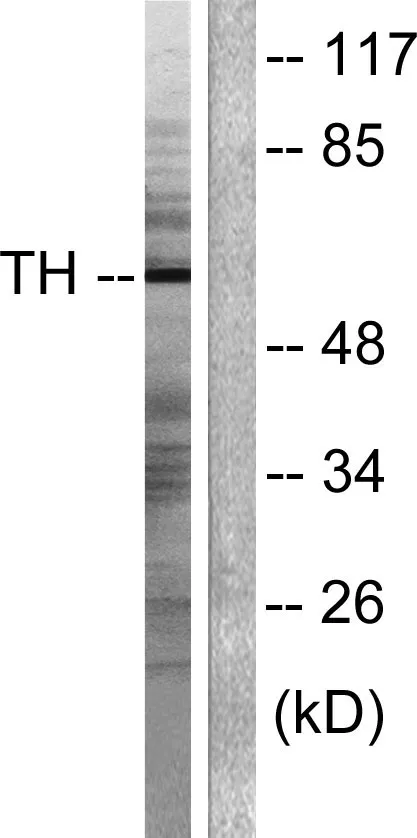
Western blot analysis of lysates from NIH/3T3 cells, treated with Forskolin 40nM 30‘, using Tyrosine Hydroxylase Antibody. The lane on the right is blocked with the synthesized peptide

No documents available.