VDR Rabbit Polyclonal Antibody

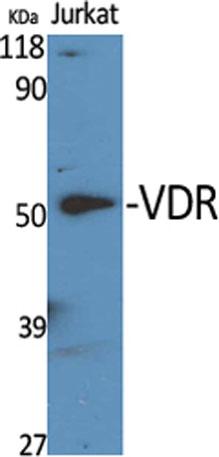
Western Blot analysis of various cells using VDR PolyclonalAntibody diluted at 1:500. Secondary antibody  was diluted at 1:20000 cells nucleus extracted by Minute TM Cytoplasmic and Nuclear Fractionation kit

Western Blot analysis of various cells using VDR PolyclonalAntibody diluted at 1:500. Secondary antibody  was diluted at 1:20000 cells nucleus extracted by Minute TM Cytoplasmic and Nuclear Fractionation kit

Catalog Number:AB-E15694
Conjugate:Unconjated
Size:100 ug
Concentration:1mg/ml
Host:Rabbit
Isotype:IgG
Clone:POLY
Immunogen:The antiserum was produced against synthesized peptide derived from human Vitamin D Receptor. AA range:181-230.
Reactivity:Human, Mouse, Rat
Applications:Western Blot: 1/500 - 1/2000. Immunohistochemistry: 1/100 - 1/300. Immunofluorescence: 1/200 - 1/1000
Molecular Weight:38kD
Purification:The antibody was affinity-purified from rabbit antiserum by affinity-chromatography using epitope-specific immunogen.
Form:Liquid
Synonyms:VDR; NR1I1; Vitamin D3 receptor; VDR; 1; 25-dihydroxyvitamin D3 receptor; Nuclear receptor subfamily 1 group I member 1

Applications

Western Blot: 1/500 - 1/2000. Immunohistochemistry: 1/100 - 1/300. Immunofluorescence: 1/200 - 1/1000

Immunogen

The antiserum was produced against synthesized peptide derived from human Vitamin D Receptor. AA range:181-230.

Target Background

This gene encodes the nuclear hormone receptor for vitamin D3. This receptor also functions as a receptor for the secondary bile acid lithocholic acid.The receptor belongs to the family of trans-acting transcriptional regulatory factors and shows sequence similarity to the steroid and thyroid hormone receptors. Downstream targets of this nuclear hormone receptor are principally involved in mineral metabolism though the receptor regulates a variety of other metabolic pathways, such as those involved in the immune response and cancer. Mutations in this gene are associated with type II vitamin D-resistant rickets. A single nucleotide polymorphism in the initiation codon results in an alternate translation start site three codons downstream. Alternative splicing results in multiple transcript variants encoding different proteins.

Synonyms:VDR; NR1I1; Vitamin D3 receptor; VDR; 1; 25-dihydroxyvitamin D3 receptor; Nuclear receptor subfamily 1 group I member 1

Storage

Store at -20°C. Avoid repeated freeze-thaw cycles.

Buffer

Liquid in PBS containing 50% glycerol, 0.5% BSA and 0.02% sodium azide.

Western Blot analysis of various cells using VDR PolyclonalAntibody diluted at 1:500. Secondary antibody  was diluted at 1:20000 cells nucleus extracted by Minute TM Cytoplasmic and Nuclear Fractionation kit

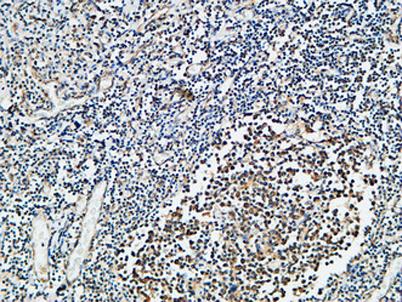
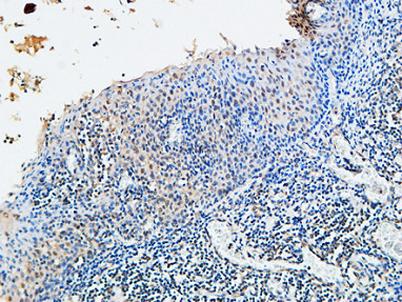
Immunohistochemical analysis of paraffin-embedded Human Amygdala. 1, Antibody was diluted at 1:100(4°overnight). 2, High-pressure and temperature EDTA, pH8.0 was used for antigen retrieval. 3,Secondary antibody was diluted at 1:200(room temperature, 30min).

Immunohistochemical analysis of paraffin-embedded Human Amygdala. 1, Antibody was diluted at 1:100(4°overnight). 2, High-pressure and temperature EDTA,pH8.0 was used for antigen retrieval. 3,Secondary antibody was diluted at 1:200(room temperature, 30min.

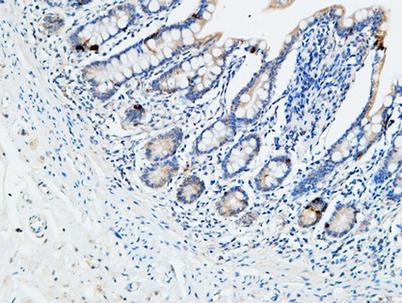
Immunohistochemical analysis of paraffin-embeddedHuman colon. 1, Antibody was diluted at 1:100(4°overnight). 2, High-pressure and temperature EDTA, pH8.0 was used for antigen retrieval. 3,Secondary antibody was diluted at 1:200(room temperature, 30min).

No documents available.